Drone Photography in Sri Lanka: An Educational Guide
Last verified 2026-07-19
How aerial photography works as a drone application in Sri Lanka: equipment, technique, the approval and privacy rules that shape it, and its status today.
By the Sri Lanka Drone Editorial Team · Last reviewed 19 July 2026
Quick answer
Aerial photography is the most common civilian drone application in Sri Lanka, spanning travel content, weddings, real estate, hotels and film production. Photography flights sit inside the standard framework: under current CAASL guidance that generally means registration, MOD security clearance and CAASL operation approval, plus the published rule against recording people without permission. Heritage sites may need Department of Archaeology no-objections, and commercial shoots add landowner releases and often higher insurance expectations.
What drone photography covers
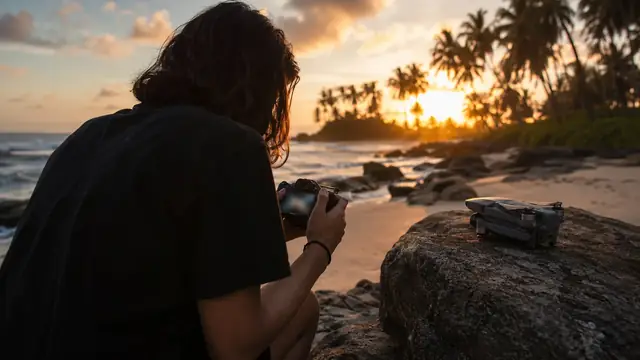
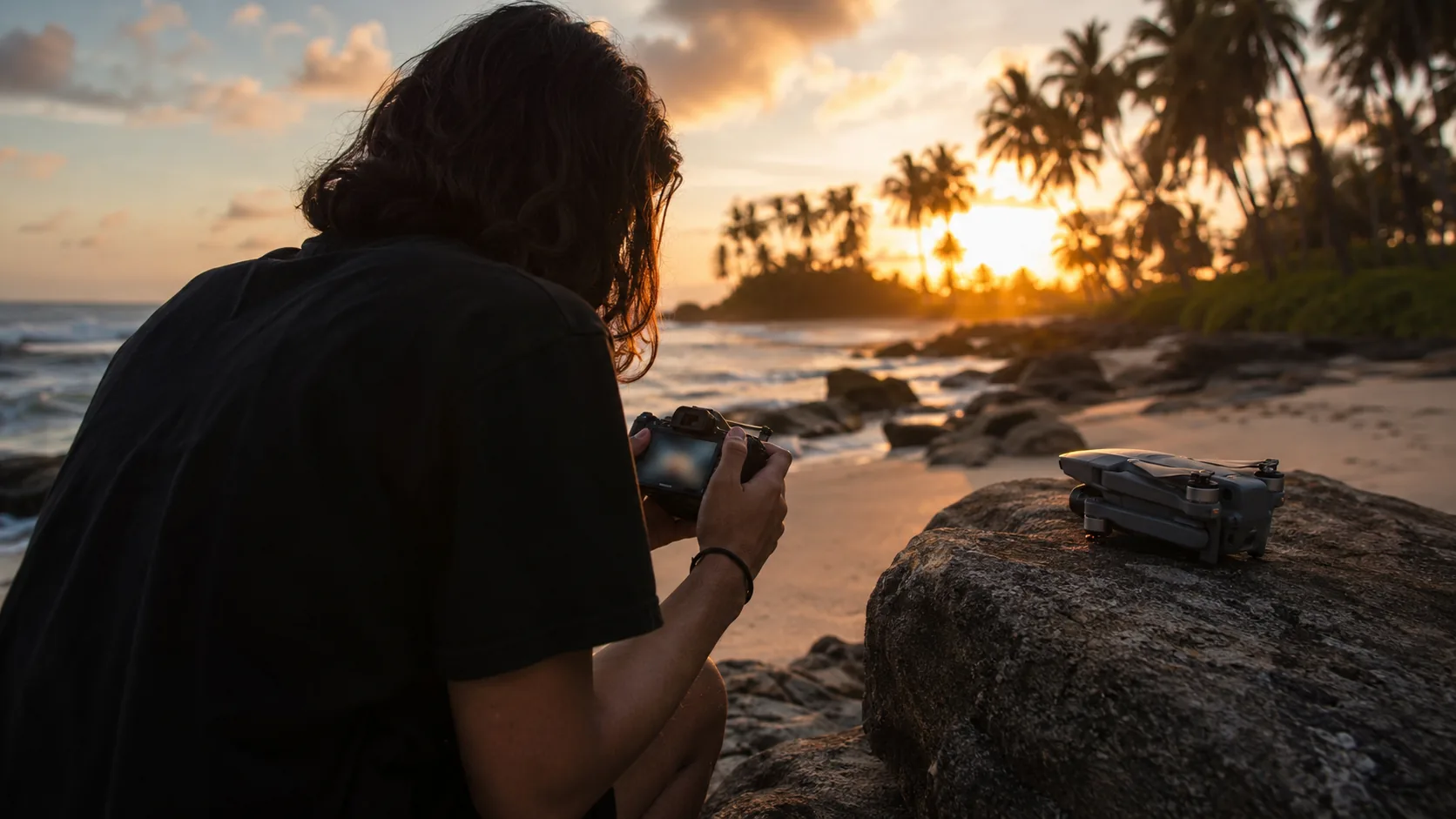
The application spans casual travel imagery, professional stills, event and wedding coverage, real estate and hotel marketing, and cinema-grade aerial production. Typical users range from visiting content creators to production houses; typical equipment runs from compact camera drones to heavy-lift cinema platforms carrying professional cameras, with outputs from social clips to broadcast footage.
How the rules shape photography
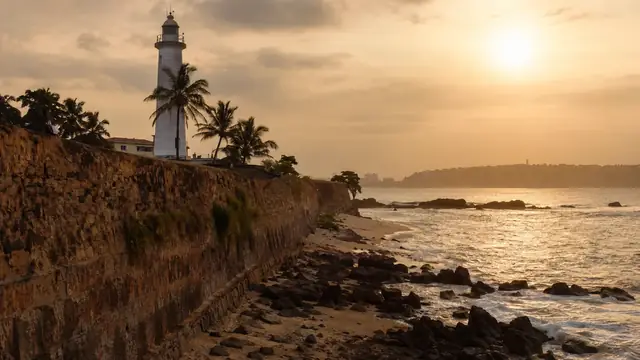
Three rules shape aerial photography in Sri Lanka more than any technical factor. Flights require the standard approval chain tied to locations and dates, so shoots are planned, not spontaneous. People may not be recorded without their permission, which affects beach, street and event work directly. And heritage locations, the most photogenic sites in the country, require Department of Archaeology no-objections. Productions should also expect landowner permissions, and clients increasingly ask for proof of approval and insurance before commissioning work.
Craft considerations in Sri Lankan conditions
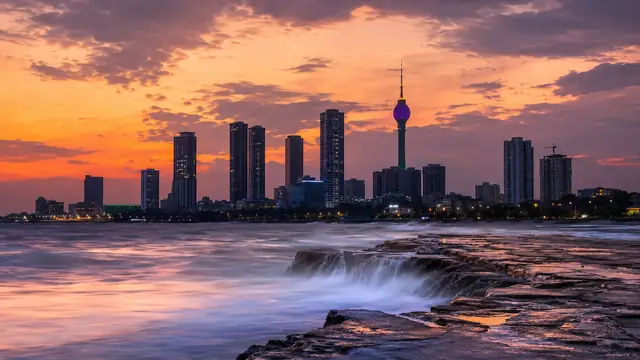
Tropical light rewards early and late flying: golden hour softens the haze that midday heat builds over the lowlands. Coastal wind and salt spray demand conservative margins and post-flight cleaning, while hill-country mist can close a location in minutes. Composition-wise, Sri Lanka's strengths from the air are its coastline geometry, tea terraces, tank-and-paddy landscapes and train lines threading the highlands, all of which can be captured while respecting the distance and privacy rules.
Frequently asked questions
Can I do drone photography as a tourist in Sri Lanka?
Yes, after completing import permissions, registration, security clearance and CAASL approval for your locations and dates. See the tourist guide for the full sequence.
Do I need extra permission for commercial shoots?
The approval framework is the same, but commercial work adds practical layers: landowner releases, client insurance requirements, heritage no-objections for protected sites, and consent from identifiable people in footage.
What are the best photography locations that are realistic to approve?
Coastal and rural locations away from airports, ports, heritage precincts and crowds are generally the most straightforward applications. Iconic heritage sites are possible for genuine projects but involve the Department of Archaeology and more time.
Spotted outdated or incorrect information? Suggest a correction.