Drone Laws in Sri Lanka: What Applies Before You Fly
Last verified 2026-07-19 · Civil Aviation Authority of Sri Lanka (CAASL)
How drone laws work in Sri Lanka: CAASL registration, defence security clearance, flight approval, mass categories and the rules that apply before any flight.
By the Sri Lanka Drone Editorial Team · Last reviewed 19 July 2026
Quick answer
Drone use in Sri Lanka is regulated by the Civil Aviation Authority of Sri Lanka (CAASL). In general, drones must be registered with CAASL, and each operation requires security clearance from the Ministry of Defence followed by an operation approval from CAASL. Very small drones of 200 g or less without a camera are exempt from registration under current CAASL guidance, but operational rules and location restrictions still apply.
- Responsible authority
- Civil Aviation Authority of Sri Lanka (CAASL)
- Who this applies to
- Recreational and commercial drone operators, residents, tourists and foreign operators flying in Sri Lanka.
- Verification status
- verified against official source
- Last verified
- 19 July 2026
- Last reviewed
- 19 July 2026
Who regulates drones in Sri Lanka?
The Civil Aviation Authority of Sri Lanka (CAASL) is the national aviation authority responsible for unmanned aircraft systems, commonly called drones. CAASL publishes registration forms, operation approval procedures and safety rules, and operates the official Drone Operations Portal and Drone Zone Map.
Other authorities are involved for specific aspects. The Ministry of Defence (MOD) issues security clearances for drone operations. The Department of Archaeology and the Department of Wildlife Conservation control flights over archaeological and protected natural sites. Sri Lanka Customs, the Ministry of Defence, the Telecommunication Regulatory Commission and the Import and Export Control Department are involved in drone imports.
Drone mass categories
CAASL categorises drones by maximum take-off mass (MTOM). The category affects registration and operational requirements.
- Category A: 25 kg or above
- Category B: 1 kg or more but below 25 kg
- Category C: above 200 g but at or below 1 kg
- Category D: 200 g or below
Under current CAASL guidance, a drone of 200 g or less that is not fitted with any data-capturing or data-retrieval tool, such as a camera, does not need to be registered with CAASL. Operational rules and location restrictions still apply.
The core legal requirements
For most drone operations in Sri Lanka, three steps apply before flying. First, the drone must be registered with CAASL using form CAA/AS/019. Second, the operator must obtain a security clearance from the MOD, submitted at least five days before the operation. Third, the operator must request operation approval from CAASL using form CAA/AS/017, together with the MOD letter and proof of insurance covering third-party damage, at least two working days before the operation.
Where a planned flight covers an archaeological site, a national park or another controlled location, a separate no-objection letter from the responsible authority, such as the Department of Archaeology or the Department of Wildlife Conservation, is required in parallel.
Key operational rules
CAASL publishes operating conditions that apply to approved flights. The published rules include the following.
- Keep the drone within visual line of sight at all times
- Do not fly near airports, helipads or areas where an emergency response is under way
- Do not overfly people or assemblies of people, and keep a safe distance from people, animals and other aircraft
- Do not fly over sensitive or protected sites such as prisons, military bases or power plants
- Do not carry goods or drop any items from the drone
- Do not photograph, film or record people without their permission
- Check the limitations defined by CAASL for the operating area before each flight
- Report accidents involving serious injury or manned aircraft to the local police and CAASL immediately
Enforcement and announced changes in 2026
CAASL has stated publicly that drone regulations issued in earlier years will be actively enforced from 2026, and that a licensing system for drone pilots is being introduced. Reported elements of the announced pilot licensing framework include a theory examination, a practical assessment, a medical examination and security clearance.
These are announced changes rather than a replacement of the current approval process described above. Operators should follow the current registration and approval procedure and monitor CAASL announcements for implementation dates.
Announced change: implementation details and dates for pilot licensing should be confirmed directly with CAASL.
What happens if you fly without approval?
Operating a drone without the required registration, clearance or approval can lead to enforcement action by Sri Lankan authorities, including confiscation of equipment and legal consequences under aviation and security legislation. Because enforcement practice varies and penalties are set by the authorities, this platform does not publish specific penalty amounts. The practical guidance is simple: complete the official process before flying.
Frequently asked questions
Is it legal to fly a drone in Sri Lanka?
Yes, drone flying is legal in Sri Lanka when the operator follows the official process: CAASL registration where required, MOD security clearance, CAASL operation approval and any site-specific permissions. Flying without these can lead to enforcement action.
Which authority regulates drones in Sri Lanka?
The Civil Aviation Authority of Sri Lanka (CAASL) is the national regulator for drones. The Ministry of Defence issues security clearances, and site authorities such as the Department of Archaeology control specific locations.
Do all drones need to be registered?
Under current CAASL guidance, most do:, only drones of 200 g or less that carry no camera or other data-capture sensor are exempt from CAASL registration. Camera drones must be registered regardless of weight.
Do I need insurance to fly a drone in Sri Lanka?
CAASL's approval guidance requires insurance cover for third-party injuries and damage as part of the operation approval request. Confirm the current insurance requirement with CAASL when applying.
Where can I check if a location is restricted?
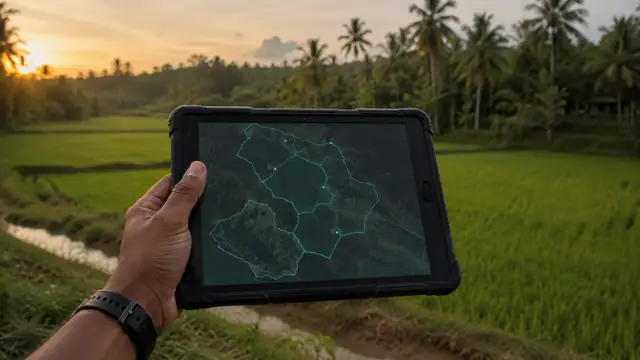
Check the official CAASL Drone Zone Map and, for heritage locations, the Department of Archaeology map. The maps are guidance tools and do not by themselves constitute flight approval.
Spotted outdated or incorrect information? Suggest a correction.