Drone Safety Rules in Sri Lanka
Last verified 2026-07-19 · Civil Aviation Authority of Sri Lanka (CAASL)
The safety rules CAASL publishes for drone operations in Sri Lanka: line of sight, distance from people, prohibited areas, pre-flight checks and weather.
By the Sri Lanka Drone Editorial Team · Last reviewed 19 July 2026
Quick answer
CAASL's published safety rules require operators to keep the drone within visual line of sight, keep a safe distance from people, animals and aircraft, avoid airports, helipads and emergency scenes, avoid sensitive sites such as military bases and power plants, and refrain from carrying or dropping items. Operators must check their drone before each flight, respect the conditions in their CAASL approval, and report serious accidents to the police and CAASL immediately.
- Responsible authority
- Civil Aviation Authority of Sri Lanka (CAASL)
- Who this applies to
- All drone operators in Sri Lanka, recreational and commercial.
- Verification status
- verified against official source
- Last verified
- 19 July 2026
- Last reviewed
- 19 July 2026
Before each flight
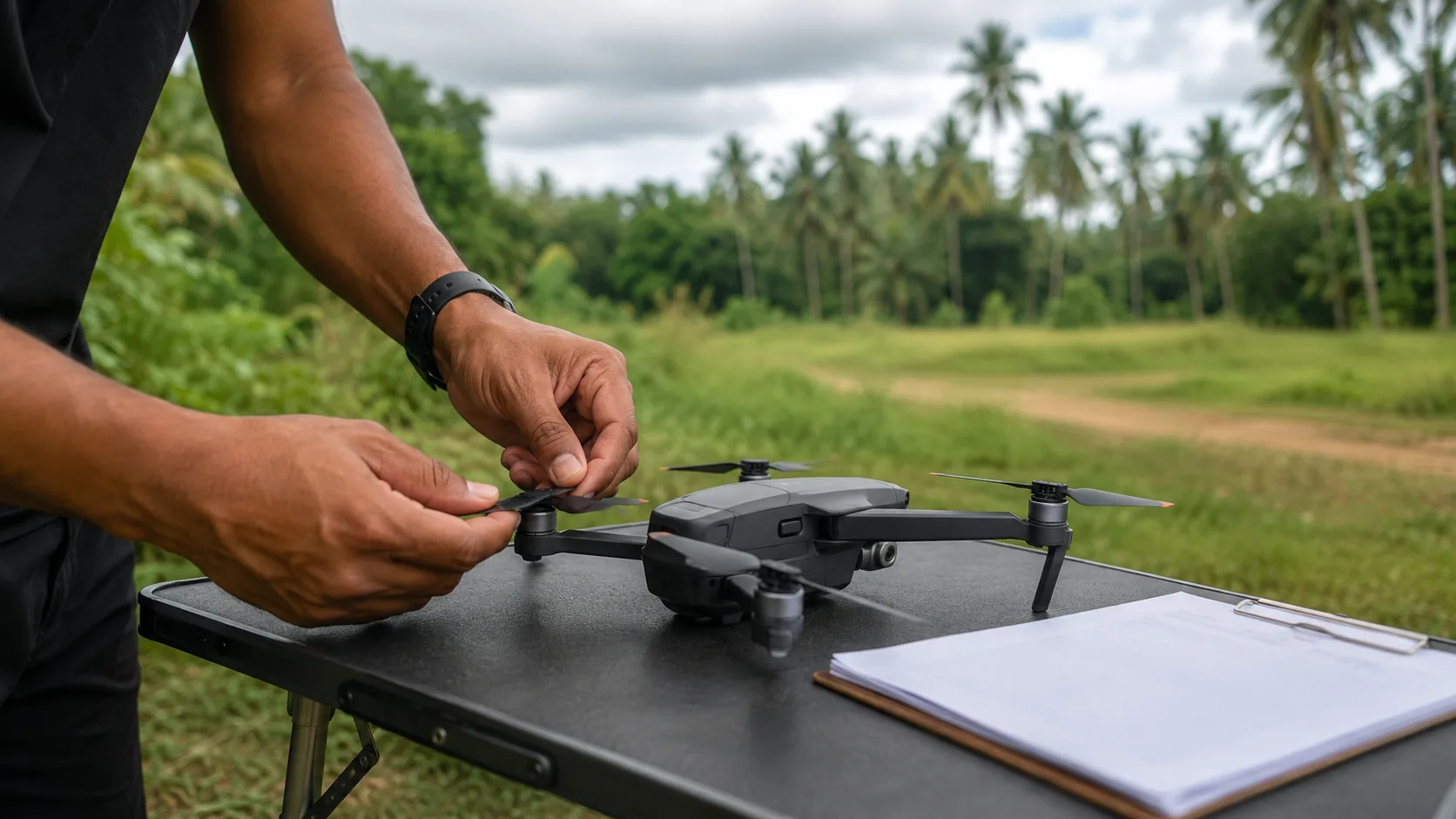
CAASL's guidance places clear responsibilities on the operator before take-off. Check the drone's condition before each flight and read the conditions stipulated in your CAASL approval. Do not modify the drone unless the change is approved by the manufacturer, and operate within the performance limits in the manufacturer's instructions.
Familiarise yourself with the operating area, check the limitations CAASL has defined for it, and check the weather. Wind, rain and heat all affect drone performance, and Sri Lanka's coastal wind and monsoon seasons deserve genuine respect in flight planning.
During the flight
The core in-flight rules published by CAASL are the following.
- Keep the drone in sight at all times
- Maintain a safe distance from people, animals and other aircraft
- Do not overfly people or assemblies of people
- Do not fly near airports, helipads or ongoing emergency response efforts
- Do not fly over sensitive or protected sites such as prisons, military bases and power plants
- Do not use the drone to carry goods and do not drop items
- Do not record people without their permission
Accidents and incident reporting
If your drone is involved in an accident that results in a serious or fatal injury to a person, or that affects a manned aircraft, CAASL requires you to inform the local police and CAASL immediately, and to file a Mandatory Occurrence Report using form CAA/AS/018. Keeping the registration certificate and approval documentation with you during operations makes this process, and any inspection, far simpler.
Battery and equipment safety
Lithium batteries are the most common cause of drone-related fires. Store and charge batteries away from flammable material, never charge unattended damaged packs, and follow airline rules when travelling: lithium batteries belong in carry-on baggage, not checked luggage. In Sri Lanka's heat, avoid leaving batteries in parked vehicles or direct sun.
Frequently asked questions
Can I fly a drone over people in Sri Lanka?
No. CAASL's published rules prohibit overflying people or assemblies of people and require a safe distance from people, animals and other aircraft.
What do I do if my drone crashes and injures someone?
Inform the local police and CAASL immediately and file a Mandatory Occurrence Report (form CAA/AS/018). This is a published CAASL requirement for accidents causing serious injury or affecting manned aircraft.
Can I drop items or deliver goods with a drone?
CAASL's standard operating rules prohibit carrying goods or dropping items from a drone. Specialised delivery operations would require separate authorisation from CAASL, and their status should be confirmed directly with the authority.
Spotted outdated or incorrect information? Suggest a correction.